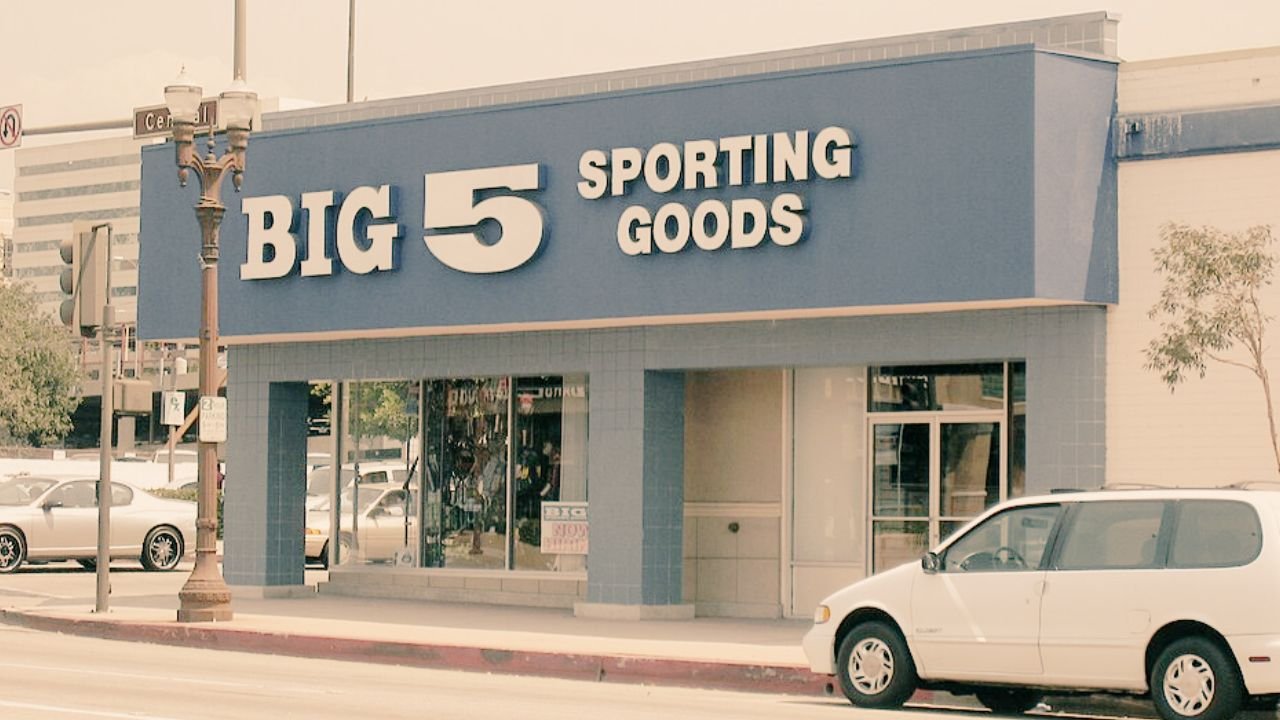

If you’ve walked past a Big 5 store lately and spotted “everything must go” banners in the window, it’s easy to assume the whole chain is finished. But that assumption isn’t quite right — and the full picture is worth understanding before drawing that conclusion.
This article breaks down what’s actually happening at Big 5 Sporting Goods in 2025: what the store closures mean, who now owns the company, how many locations are still open, and what the near-term situation looks like for the chain.
The Short Answer: Big 5 Is Not Shutting Down Entirely
To be direct about it — Big 5 Sporting Goods is not undergoing a company-wide liquidation. There is no announcement that every store is closing and the brand is disappearing.
What is happening is a period of restructuring. The company has been closing underperforming stores, pulling back on its overall footprint, and operating under new private ownership. That’s a meaningful set of changes, but it’s very different from a chain-wide shutdown.
As of mid-2025, Big 5 was still operating around 414 stores across the country. The chain is smaller than it was, and it’s under real financial pressure — but it’s still running.
Big 5 Was Acquired — What That Actually Means
One of the biggest changes at Big 5 in 2025 is one that many shoppers probably haven’t heard about: the company was sold.
In June 2025, Big 5 announced a definitive agreement to be acquired by a partnership between Worldwide Golf and Capitol Hill Group. The all-cash deal was valued at approximately $112.7 million in enterprise value, according to GlobeNewswire.
Following the transaction, Big 5 was taken private and stopped trading on Nasdaq. According to StockTitan, the company became a wholly owned private subsidiary under the new ownership structure.
That’s a significant corporate development — but it’s not a closure. Think of it this way: Big 5 moved from being a public company answerable to outside shareholders to a private company with new owners calling the shots. The stores didn’t vanish because of that transition. The brand and its operations continued under different leadership.
Being delisted from a stock exchange can sound alarming, especially if you’ve been following the company’s share price. But private ownership is a common outcome for struggling public retailers, and it doesn’t automatically mean the business is winding down.
Why Stores Have Been Closing
Store closures are real, and they’ve been happening at a steady pace. Big 5 has been shutting locations in multiple states, including Colorado, California, Idaho, and Arizona, among others.
In fiscal 2024, the company closed more stores than it opened, according to TheStreet. That reflects a deliberate effort to reduce the size of the operation rather than a sudden collapse.
The reasons behind the pullback are fairly straightforward. Inflation hit consumer spending hard, and sporting goods fall into the discretionary category — meaning people cut back on those purchases when budgets get tight. Big 5 also cited weak sales and underperforming locations as factors driving the closures.
The store count has been declining gradually. The chain had roughly 430 stores in late 2023, according to the Morgan Hill Times. By mid-2025, that number had dropped to around 414, based on reporting from both Sierra Daily News and TheStreet. That’s a contraction of about 16 locations over roughly 18 months — meaningful, but not a sudden disappearance.
Some closures have also been tied to lease disputes or expiring lease agreements, which adds another layer to the picture. Not every closing is purely about sales performance — sometimes a landlord situation makes a location financially unworkable.
Local Closure Sales Are Not the Same as a Company-Wide Shutdown
This is probably the most important distinction to understand if you’ve seen signage at a local store or read a news report about a Big 5 closing near you.
When a single Big 5 location runs a liquidation sale with deep discounts and “going out of business” signs, that sale applies only to that store. It does not mean every Big 5 across the country is shutting down at the same time.
Local reports illustrate this clearly. InMaricopa covered a store-level closing sale and quoted employees about the specific closure — but that was one location, not a chain-wide event. East Idaho News confirmed that a Pocatello store was expected to close permanently. The Denver Gazette reported on multiple Colorado closures with expected final dates for individual stores.
Each of those stories is accurate about the location it covers. But they describe local events, not a nationwide shutdown. In fact, the Morgan Hill Times noted that when one California location closed, customers were directed to other nearby Big 5 stores that remained open.
A retailer can close dozens of locations and still operate a functioning chain. It happens regularly in retail — companies right-size their store networks without exiting the market entirely. Big 5 appears to be doing exactly that.
How Many Big 5 Stores Are Left — and Where Are Closures Happening?
Based on mid-2025 reporting, Big 5 was operating in the range of 414 stores. That figure comes from multiple sources and reflects the company’s gradual contraction over the past couple of years.
Closures have been documented across several states:
- Colorado — Multiple locations with reported closing dates, per the Denver Gazette
- California — At least one confirmed local closure with nearby stores still open
- Idaho — The Pocatello location confirmed as permanently closing
- Arizona — At least one location with a store-level closing sale reported
Other states are likely affected as well, though confirmed closures are documented on a store-by-store basis through local reporting rather than through a single corporate announcement listing every affected location.
It’s worth noting that reported closing dates can shift depending on how quickly inventory moves. Some stores stay open longer than initially expected, while others close sooner. If you’re trying to find out whether a specific location near you is closing, checking directly with the store is more reliable than relying on a single news report.
What Does the Near-Term Outlook Look Like?
Being honest about this: Big 5 is still under pressure. The macro environment for discretionary retail hasn’t fully recovered, and the company was already dealing with weak profit margins heading into the ownership transition.
That said, the acquisition by Worldwide Golf and Capitol Hill Group suggests the new owners see enough value in the business to buy it and keep it running — otherwise a liquidation would have been the simpler path. Private ownership also gives the company more flexibility to restructure without the scrutiny and short-term pressure that comes with being publicly traded.
For shoppers and anyone following the business, it’s reasonable to expect more store closures going forward as the new owners continue evaluating the portfolio. But the current evidence points to a smaller, privately held Big 5 — not a brand that’s about to vanish entirely.
If you follow retail business news closely, Quick Business Daily covers ownership changes, store closures, and broader trends in the retail sector on an ongoing basis.
The Bottom Line
Big 5 Sporting Goods is not going out of business in the sense that most people mean when they ask that question. The company is restructuring — closing underperforming stores, shrinking its footprint, and operating under new private ownership after a $112.7 million acquisition in June 2025.
What’s genuinely true is that individual stores are closing, the chain is smaller than it was, and the financial environment remains challenging. What isn’t accurate is the assumption that every location is shutting down or that the brand is headed for immediate liquidation.
If your local Big 5 is closing, that’s a real event worth knowing about. But it says more about that specific location than it does about the entire company’s future.
Also Read: